

“If I had asked people what they wanted, they would have said faster horses.” That wonderful quote is often attributed to Henry Ford. And though there is great debate as to whether he actually said it or not, the sentiment is absolutely fantastic. It suggests that people don’t always know what they need to know, even if they fervently think they do. Back in his day, Ford envisioned a far different world. A world where cars moved people from place to place, rather than horses. A world few others could have even dreamt of at the time. Back then, faster and stronger horses were the logical goal. A goal the masses would have been clamoring for since that was all they could envision. But Ford had other plans, for he could see what was possible, even when everyone around him could not.
Isn’t that what teachers do every day? You walk into your classroom or rehearsal hall and set a path for students to accomplish what they can’t even imagine. You set the pace. Your set the course. In many ways, you set their destiny. And though they may want the educational equivalent of faster horses, it is up to every educator to teach them what they need to know to “drive a car.”
Peter Loel Boonshaft, Director of Education
KHS America
The content of this Blog article or Banded Story is the intellectual property of the author(s) and cannot be duplicated without the permission of KHS America and/or the author(s). Standard copyright rules apply.
RECENT BOONSHAFT'S BLOG POSTS
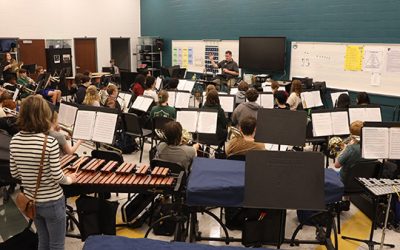
#310. Rehearsals
T. S. Elliot stated that “the journey, not the arrival matters.“ I think we can all agree with that wonderful thought. As teachers, that is our stock-in-trade. It is what we dedicate our professional lives to. It surely describes the big picture of our time with our...

#309. Believe
As you walk into your classroom today, remember these words of Anatole France, “To accomplish great things, we must not only act, but also dream; not only plan, but also believe.” We can follow the advice of the remarkable sentiment: “To achieve all that is possible,...

#308. Why Make It Vivid?
When rehearsing an ensemble, one of the challenges is to convince our musicians that they must make the piece not only come to life, but do so incredibly vividly. The best way I have found is to ask them how many times we will rehearse a piece before a...
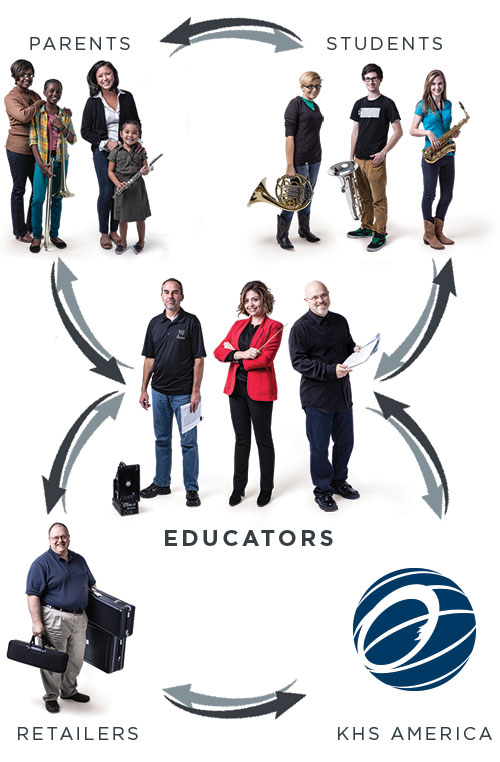 We look forward to the evolution of this exciting program, and welcome feedback on how we can further enhance the work that you do in music education.
We are excited to offer your program the opportunity to join the KHS America Academic Alliance today.
We look forward to the evolution of this exciting program, and welcome feedback on how we can further enhance the work that you do in music education.
We are excited to offer your program the opportunity to join the KHS America Academic Alliance today.