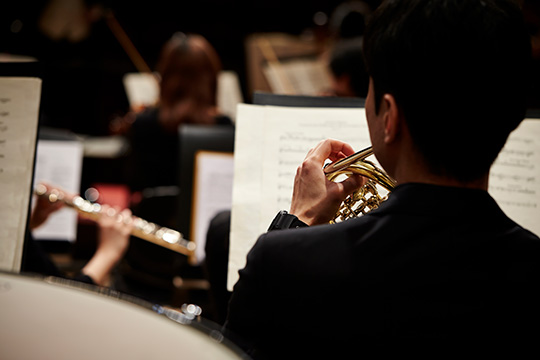
In my last blog, I wrote about the idea of using scatter seating in rehearsals. The virtues of this approach can’t be overstated. Another related idea is using what I call “targeted scattering.” So often I ask my alto saxes to sound like the horns when they are playing those incredibly-common doubled passage. Or asked my third clarinets to listen to, and tune to third clarinets. Or my first violins to listen to my second violins? And the faces I see looking back at me are confused stares, because awareness and distance often cause that to be difficult. Enter targeted scattering. That is where I instruct only the horns and alto saxes to scatter, meaning that the players of only those two sections will sit so that the horns and alto saxes are completely interwoven. So now, instead of having horns and saxes, I have “scorns!” Doing that with any sections that need extra attention integrating their parts will provide results that are truly amazing.
Peter Loel Boonshaft, Director of Education
KHS America
The content of this Blog article or Banded Story is the intellectual property of the author(s) and cannot be duplicated without the permission of KHS America and/or the author(s). Standard copyright rules apply.
RECENT BOONSHAFT'S BLOG POSTS
#310. Rehearsals
T. S. Elliot stated that “the journey, not the arrival matters.“ I think we can all agree with that wonderful thought. As teachers, that is our stock-in-trade. It is what we dedicate our professional lives to. It surely describes the big picture of our time with our...

#309. Believe
As you walk into your classroom today, remember these words of Anatole France, “To accomplish great things, we must not only act, but also dream; not only plan, but also believe.” We can follow the advice of the remarkable sentiment: “To achieve all that is possible,...

#308. Why Make It Vivid?
When rehearsing an ensemble, one of the challenges is to convince our musicians that they must make the piece not only come to life, but do so incredibly vividly. The best way I have found is to ask them how many times we will rehearse a piece before a...
 We look forward to the evolution of this exciting program, and welcome feedback on how we can further enhance the work that you do in music education.
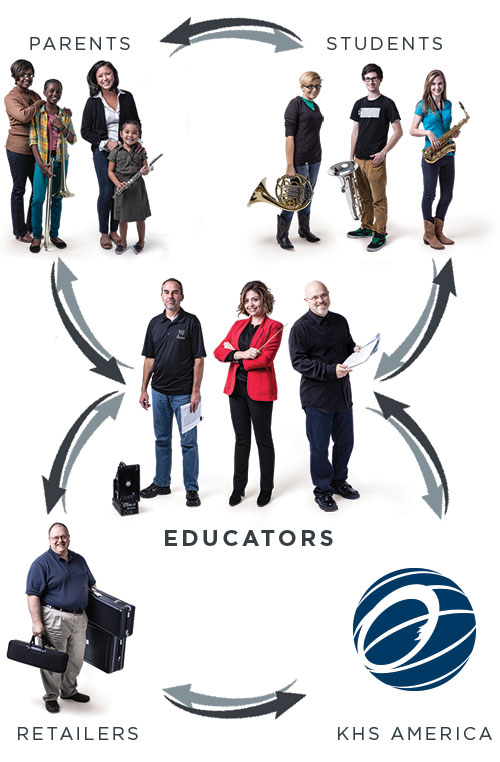
We are excited to offer your program the opportunity to join the KHS America Academic Alliance today.
We look forward to the evolution of this exciting program, and welcome feedback on how we can further enhance the work that you do in music education.
We are excited to offer your program the opportunity to join the KHS America Academic Alliance today.